
What Is the Difference Between DMD and DDS?
If you’ve ever paid attention to the credentials of your oral healthcare providers you may have noticed that many list themselves as DMDs while others as a DDS. But is there a meaningful difference between a dentist listed as a DDS vs. DMD? Let’s take a deeper look into these acronyms to find out what they mean.
DMD vs. DDS
DMD can either mean Doctor of Medicine in Dentistry or Doctor of Dental Medicine. DDS stands for Doctor of Dental Surgery. The American Dental Association (ADA), states that even though the names look different, these professionals have undergone the same training and earned the same accreditation. In some universities, a dental student may graduate with a DMD, others a DDS, but in whichever case, the qualifications to hold that title are the same.
The ADA confirmed Baltimore College established the first degree for a Doctor of Dental Surgery in 1840. Harvard University launched its first Dental school in 1867 under the Dentariae Medicinae Docterae name (Doctor of Medicine in Dentistry) because Harvard assigns names to their degrees in Latin. Even though they are degrees with the exact academic requirements, they still have different naming conventions.
Today, most learning institutions award a DMD degree rather than a DDS degree. For aspiring dentists, it does not matter if they graduate with a DDS or DMD – they will have the training to practice general dentistry once they’ve completed their program. What does it entail to become a DMD or DDS? First, you will have to go through four years of undergraduate learning. After that, the graduates go for another four years (possibly three in accelerated programs) of dental school where they learn in classrooms, clinics, and laboratories to enhance their training in more practical settings.
In their first two years in dental school, dental students usually study biomedical sciences including biochemistry, pharmacology, anatomy, and pathology. In the last two years, they take clinical training and dental lab training.
After dental school, dentists must take the National Board Examinations administered by the Joint Commission on National Dental Examinations (JCDNE). Afterward, they must sit for a regional clinical board examination. In both cases, they must pass these exams. Dentists must also do a jurisprudence examination, which involves laws before they get licensed as qualified dentists. Through this long learning process, you can feel confident that your dentist is competent to treat you whether they’re a DDS or a DMD.
Specialization After a DDS or DMD
Most dentists, after obtaining their license, stick to general dentistry. However, some may opt to continue with learning and specialize in certain niches of oral health. You may require two to six years of training to specialize, depending on which specific aspect you would like to specialize in. Dental specialties include oral surgery, prosthodontics and periodontics, orthodontic, endodontic, and pediatric dentistry. Dentists go through rigorous training and must pass a lot of exams to practice a specialization. It does not matter if they have a DDS or DMD. You should choose one according to their professionalism, communication, types of services provided, and skills.
Dentists must also familiarize themselves with continuing education requirements. The American Dental Association provides continuing education that dentists must take part in to meet or exceed state licensing demands to remain in practice.
What about other dental acronyms?
So while we’ve established that there’s no real difference between DMD vs. DDS you may see that some dentists have other acronyms attached to their names as well. These can be important, particularly if you’re looking for a dentist with a certain skillset or level of expertise. Here are a couple common ones you may see:
- FAGD. This stands for Fellow in the Academy of General Dentistry. A dentist who has earned this title has completed over 500 hours of continuing education. To prove their knowledge level, an FAGD Fellow must pass an exam that’s as difficult as dental board certification exams.
- MAGD. This acronym stands for Master of the Academy of General Dentistry. This is the next step up from FAGD and requires over 1,100 hours of continuing education, likely meaning they’re up to date on many of the latest techniques and technologies related to general dentistry. Again, this requires the passing of an extremely difficult exam.
- FICOI. This stands for Fellow of the International Congress of Oral Implantologists. This title comes with substantial training and experience in performing dental implants.
Ultimately, the educational title your dentist has earned doesn’t really matter. What does matter is how passionate and committed a dentist and their staff are to their patients’ oral health. A DDS or DMD degree both equip dentists with the knowledge they need to serve their patients. If you’re looking for a team of dedicated dentists and implant surgeons in Southeast Michigan, contact Fortson Dentistry and schedule an appointment at one of our metro Detroit locations today.
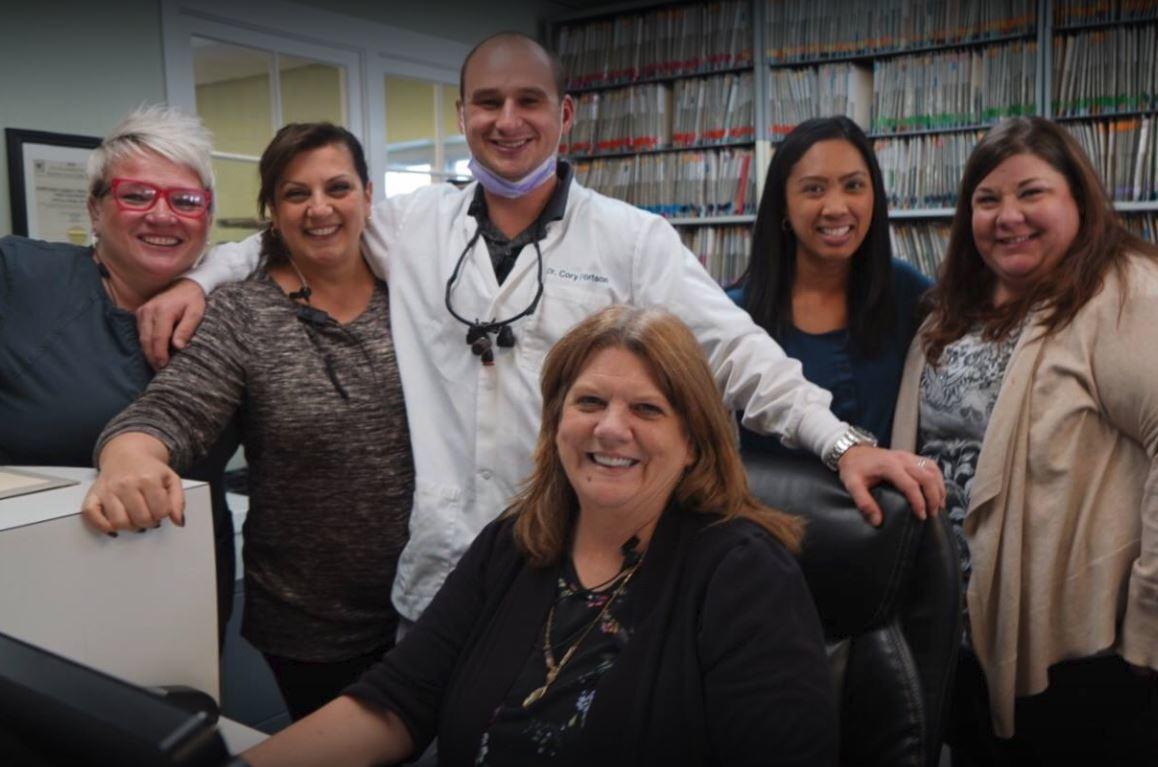
Fortson Dentistry’s staff provides high-quality dental services to our patients in Southeast Michigan from our five locations.